"Design is the silent ambassador of your brand," said Paul Rand, the American art director and graphic designer. But let's be honest -- it's not a very good ambassador if it can't hold a decent conversation.
We live in a world drowning in content. Every second, countless words, images, reels, and infographics vie for our attention. Most of them wash over us like uninspired elevator music, pleasant enough, but utterly forgettable.
But some designs speak. They see us. They connect with us.
What's their secret?
They are designed relationally. They don't merely present information; they build relationships between ideas, between designer and audience, between the self and the world.
And beneath this lies a powerful foundation in relational cognitive psychology.
The Science of Relatability: Why We Crave Connection
Humans are wired for relationships. We're Homo narrans, the storytelling species, but we're also Homo connectus (if I may coin a Latinate neologism): the connected species. Relational cognitive psychology studies how our mental processes are shaped not in isolation, but through interaction with people, language, culture, and context.
In short:
- We don't just think alone. We think with and through others.
- Meaning is co-constructed.
- Memory is social.
- Understanding is shaped by context.
When your design acknowledges these truths, it becomes relatable. It stops being an aloof monologue and turns into a meaningful dialogue.
The Problem with Non-Relational Design
Picture this: You land on a website that greets you with a wall of jargon-laden text in 8-point font. Or worse: a flashy visual that is so abstract it might as well be modern art at a pretentious gallery. You squint. You frown. You click away.
Why?
Because you couldn't find yourself in it. It failed to relate to you.
Non-relational design is a design that assumes people are passive recipients of information. But people aren't sponges. They're meaning-makers.
Designing Relationally Means Designing With, Not At
Relational design asks: How will this make someone feel? What connections will they draw? What prior knowledge or cultural touchstones will they bring? It treats the audience not as passive consumers but as co-authors of meaning.
Here are a few principles:
- Context is king. Meaning is shaped by context. Don't just plop content down; frame it so it resonates with the audience's world.
- Empathy is the cornerstone. Understand your audience's needs, fears, desires, and cultural references.
- Dialogue over monologue. Invite participation. Use questions. Leave room for interpretation.
- Metaphor and storytelling. We think in stories, analogies, and images. Use them to build bridges between the known and the new.
- Shared schemas. Relational psychology tells us we share mental models (schemas) for understanding. Tap into them to make content intuitive.
Examples in Action
Let's get out of theory and get our hands gloriously dirty in real life:
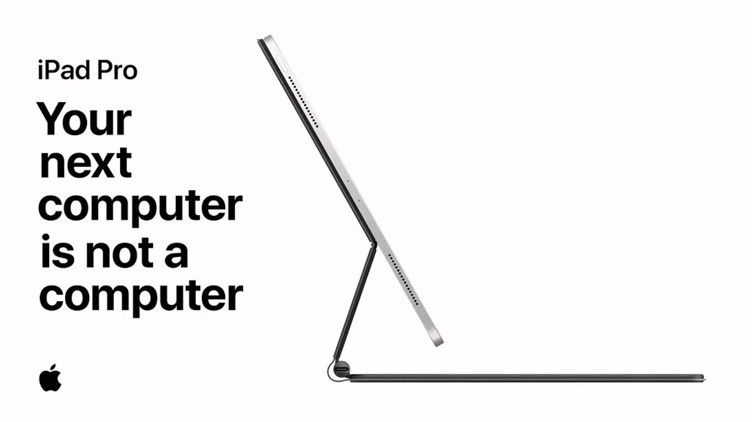
- Apple's product pages. Minimalist, yes, but they always frame the device in terms of your life. "Your next computer isn't a computer." They speak to you about you.
- Airbnb's community-driven UX. Not "rent a room" but "belong anywhere." It's not about the transaction; it's about the relationship.

Tapping Into Relational Cognitive Psychology When Designing
Here's the magic trick for designers, writers, marketers, and creators:
Design for minds that think together.
- Use social cues. Language that implies conversation, not command.
- Acknowledge the other. Show you see them.
- Design for shared understanding. Don't assume knowledge; build on it.
- Invite co-creation. Let users adapt, customise, comment, and participate.
- Consider emotional journeys, not just cognitive steps.
Relational cognitive psychology isn't some dusty academic niche. It's a profound reminder:
Your audience is not an object to act upon. They are a subject to relate to.
A Forward-Looking View
We're hurtling into an era of AI, hyper-personalisation, and interactive storytelling. The future of design will reward those who understand that meaning emerges between us. Imagine interfaces that learn our metaphors. Ads that listen. Content that adapts its tone depending on the cultural context of the reader. Design will become not less human, but more human, if we allow relational principles to guide us. Because in the end, that's what makes content relatable: not some trick or hack, but the timeless truth that we humans are meaning-makers, seeking connection in everything we do.
Design as Relationship
To design relationally is to honour the fundamental truth of being human: we exist in relation. Your content, your interface, your brand - they're not static things. They're invitations to a conversation.
So next time you design something, ask not just: How does this look? Or what does this say?
But: How will this connect?
Because that, my dear reader, is where the magic happens.